Maldives Tourism Brief: Visitors Are Returning, but Are the Beds Being Filled?
24 Oct 2026, 14:00 · by IzuCT · 5 min read · Tourism · EN

October’s improving tourist arrivals conceal a deeper challenge: substantial unsold accommodation capacity. For Maldives tourism, lasting success depends on converting visitors into longer stays, higher occupancy, stronger revenues, and more disciplined investment decisions across islands.
Free tourism insights
Get Free Tourism Insights
Receive selected MTO insights, tourism data alerts, and new resource updates by email.
Get Free Tourism InsightsImagine standing at Velana International Airport, watching aircraft arrive. Every landing brings tourists, spending and economic opportunity. From this vantage point, the health of the tourism industry might seem straightforward: more aircraft, more visitors, more prosperity.
Yet across the atolls, thousands of accommodation beds may remain unsold.
This is the central paradox confronting Maldives tourism in October 2026. The recovery in arrivals is becoming visible, but the recovery in accommodation utilisation is less certain. Understanding the difference is essential for decisions about pricing, investment and national tourism policy.
October's unexpected turning point
The month began cautiously.
According to the Maldives Tourism Observatory's Daily Updates, the country received 79,529 tourists during 1–14 October, compared with 82,770 during the equivalent period in 2025—a decline of 3.9%.
Then the picture changed.
Figures reported for 18 October show that cumulative October arrivals had reached 107,340, marginally exceeding the 107,088 recorded during the corresponding period last year.
The mathematics reveals something more interesting. Between 15 and 18 October alone, approximately 27,811 tourists arrived, compared with 24,318 during the same four days in 2025.
That represents growth of 14.4%.

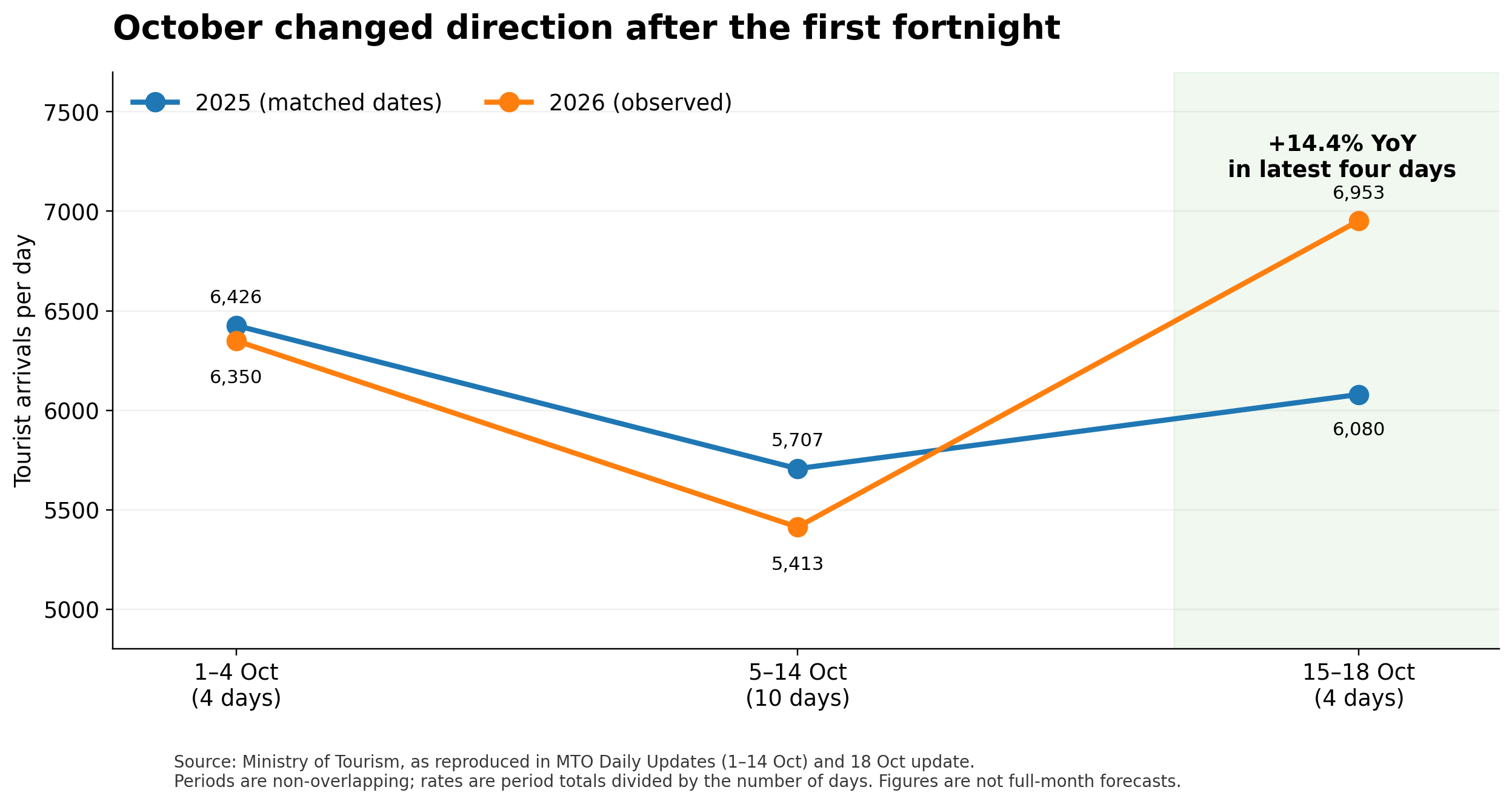
Figure 1 illustrates how the October arrival pace changed across three consecutive periods.
A weak opening fortnight had been followed by a much stronger four-day period.
This does not establish a sustained recovery. But it illustrates why monthly averages can conceal important turning points. For airlines, destination marketers and revenue managers, detecting these changes early can be commercially valuable.
The invisible problem: capacity grows differently from demand
Now consider a different measurement: the number of bed-nights actually sold.
The Observatory's Capacity Pressure framework compares available accommodation capacity with realised demand. It introduces the idea of shadow inventory: bed-nights that exist but remain unsold.
September provides a revealing example.
Compared with August 2026, arrivals declined approximately 23.8%, while sold bed-nights fell 28.1%. Available capacity declined by only 4%.
Consequently, accommodation utilisation dropped from 58.9% to 44.1%, while shadow inventory expanded approximately 30.5%.
This is more than a seasonal fluctuation in visitor numbers. It reveals a mismatch between relatively fixed accommodation supply and rapidly changing tourist demand.
Consider a hypothetical property with 100 available beds.
At 44.1% utilisation, approximately 1,323 bed-nights would be sold during a 30-day month. The remaining 1,677 bed-nights would generate no accommodation revenue.
Even if the property attracts more guests, profitability depends on how many additional nights are sold, at what price, and at what operating cost.
The essential lesson is simple: more tourists do not automatically mean proportionately more tourism revenue.
What the October capacity estimate tells us
The Observatory's October planning baseline suggests improvement.
Using a three-month moving-average methodology and a recent conversion factor of 6.45 sold bed-nights per arrival, it estimates:
Approximately 1.13 million sold bed-nights.
Approximately 959,700 unsold bed-nights.
Capacity utilisation of approximately 54.1%.
An average stay of 6.6 nights.
A capacity-pressure index of approximately 1.85 times.
These are planning estimates, not completed October observations.

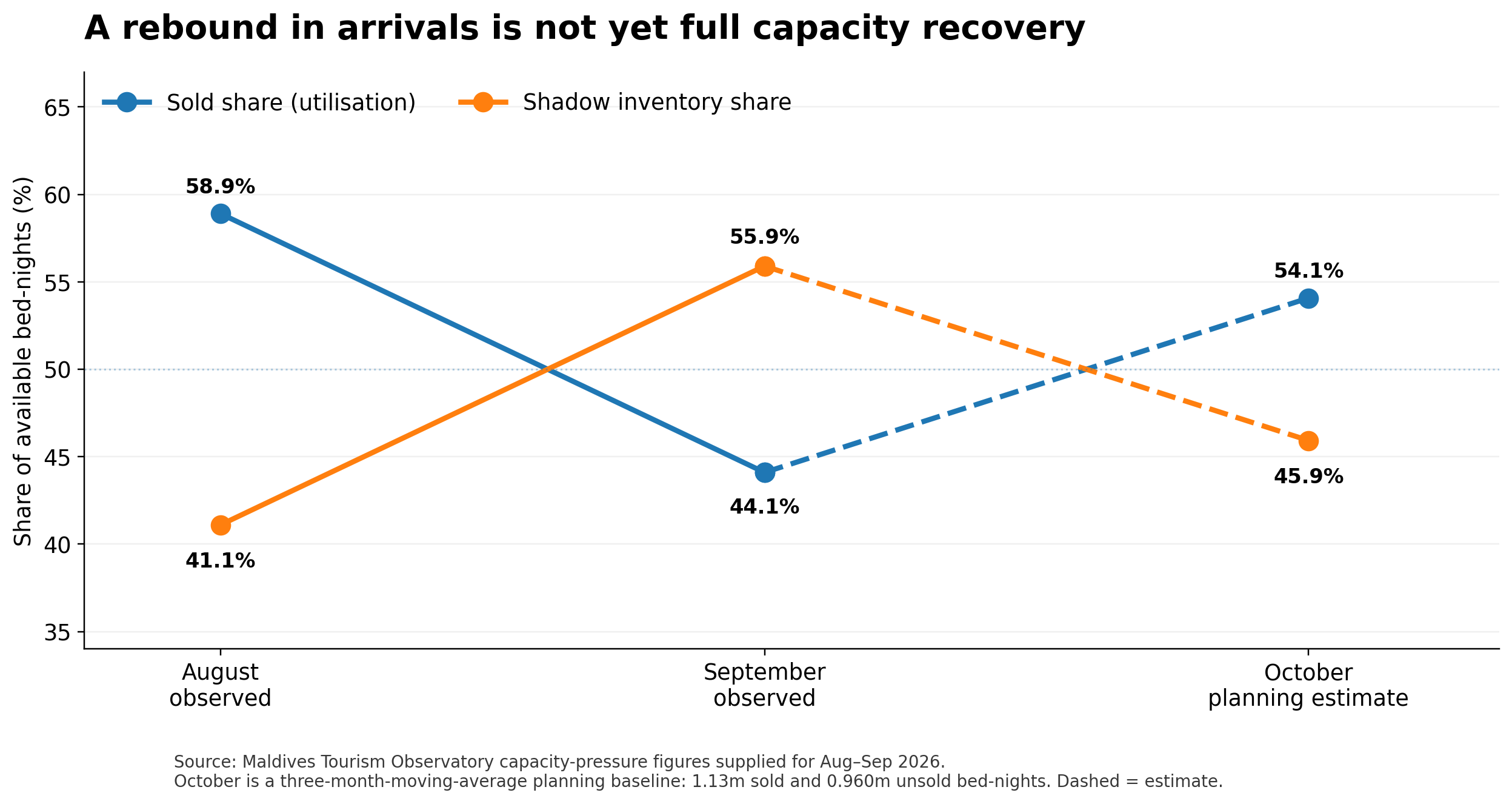
Figure 2 compares realised August–September utilisation with October's planning baseline.
Nevertheless, their commercial implication is important. Even with recovering demand, approximately 46% of projected bed-night capacity would remain unsold.
For an accommodation operator, the choice is not necessarily between maintaining high prices and discounting everything.
A better strategy may involve protecting prices on high-demand dates while offering carefully targeted incentives for weaker periods.
For example, a resort could encourage guests to extend a five-night holiday to six nights rather than reduce the advertised rate across every booking. The financial outcome would depend on the incremental contribution from that extra night.
Not every tourist generates the same demand
Another overlooked dimension is the composition of arrivals.
By 14 October, China represented 19.2% of year-to-date tourist arrivals, followed by Russia at 14.5% and the United Kingdom at 7.6%.
Resorts accommodated approximately 73.9% of tourists, while guesthouses accounted for 21.8%.
These figures describe two interconnected but commercially different accommodation markets.
Ministry statistics also indicate that approximately 88% of British visitors stayed in resorts, whereas Chinese and Italian tourists were more likely to select guesthouses than British visitors.
Consequently, growth in one source market may not compensate for weakness in another.
A hypothetical increase of 10,000 short-stay visitors cannot necessarily replace 10,000 visitors staying substantially longer, particularly when spending patterns and accommodation choices differ.
For destination managers, the relevant question is therefore not simply which market supplies the most tourists, but which markets generate the greatest sustainable economic value per visitor and per bed-night.
The wider economic and policy consequences
The challenge extends beyond accommodation operators.
The World Bank's 2026 assessment identifies Middle East air-travel disruptions, weaker tourism prospects and external financing pressures as major vulnerabilities for the Maldivian economy.
October also brought policy uncertainty. On 20 October, legislation was introduced to reverse recently implemented GST provisions affecting overseas sellers of Maldives tourism products. Separately, resort-island lease acquisition costs were reduced in several atolls.
Both developments illustrate the difficult balance between securing public revenue, encouraging investment and protecting competitiveness.
But when accommodation utilisation is weak, expanding supply without understanding future demand can intensify commercial pressure.
Investment decisions should therefore examine projected occupancy, source-market access, transport connections and environmental capacity—not merely historical growth in tourist arrivals.
What decision-makers should watch next
As of 18 October, the Maldives had received approximately 1.68 million tourists in 2026.
To match the approximately 2.25 million tourists recorded in 2025, another 567,000 arrivals would have been needed over the final 74 days of the year—roughly 7,665 tourists per day.
That is substantially above the October daily average observed through 18 October.
The final quarter therefore presents both opportunity and uncertainty.
Three indicators deserve particular attention: whether stronger October arrivals persist, whether those arrivals translate into longer stays and higher bed-night sales, and whether accommodation revenue improves without excessive discounting.
The Maldives does not merely need more visitors. It needs a tourism system capable of converting visitor demand into stronger returns for businesses, workers, communities and the national economy.
October's emerging lesson is that the number of tourists arriving tells us how busy the destination is becoming. The number of bed-nights sold tells us much more about how effectively its tourism capacity is being used.