Tourism Industry Insight: How Island Supply Boats Can Carry More Value Both Ways
09 Oct 2026, 06:12 · by IzuCT · 4 min read · Tourism · EN
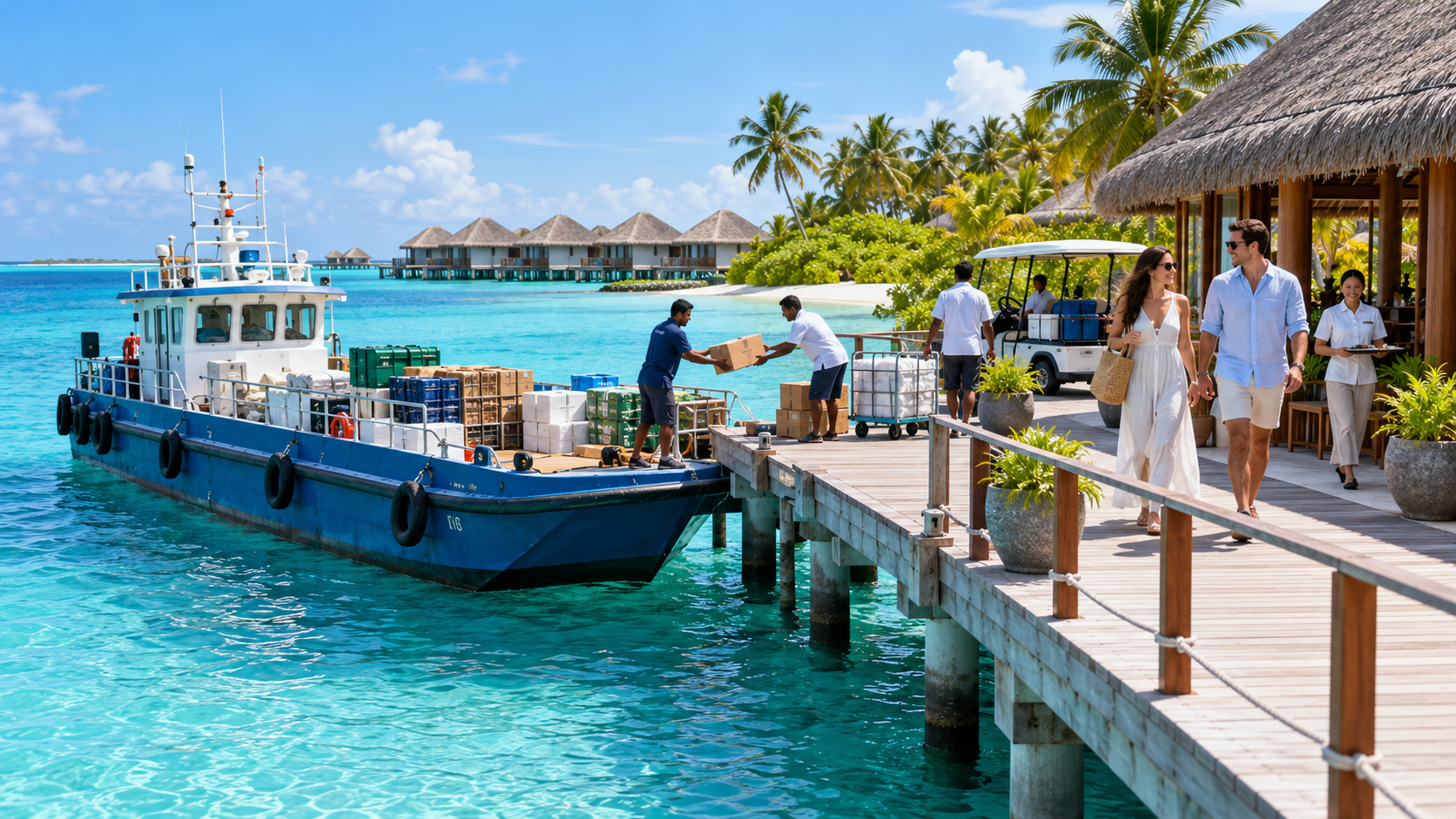
Island deliveries create transport capacity in two directions. Using suitable return journeys more effectively could reduce waste-management costs while supporting cleaner tourism operations.
Free tourism insights
Get Free Tourism Insights
Receive selected MTO insights, tourism data alerts, and new resource updates by email.
Get Free Tourism InsightsAt dawn, a cargo vessel unloads supplies at a Maldivian resort. The crew checks its manifest, secures the deck and prepares to return. On the island, neatly separated aluminium cans and flattened cardboard are waiting for collection. Another vessel may eventually be chartered to remove them, although the supply boat is already travelling back towards the mainland. Could that return journey do more useful work? The answer depends not simply on spare space, but on whether the vessel can safely, legally and economically carry the materials.
A return journey is capacity already paid for
Transport economics distinguishes a vessel's round-trip cost from the additional cost of carrying another load.
Fuel, crew and vessel expenses may already be committed when a supply boat returns. If suitable cargo space remains, transporting segregated recyclable materials could cost less than arranging a separate collection voyage.
This is backhauling: using the return leg of a transport network to move materials in the opposite direction.
It does not make transport free. Loading, cleaning, insurance, handling, additional fuel consumption and possible detours still cost money. Vessel compatibility matters more than the appealing image of an empty deck.
The Maldives provides a particularly clear example. The World Bank's 2024 Country Climate and Development Report found that resorts surveyed identified a lack of cost-effective transport among major barriers to better waste management. Remote islands also face difficulties arranging regular waste transfers.
That is evidence of a logistics constraint, not proof that backhauling will always work.
The economics explored in The Distance Premium apply in both directions. Supplies must reach the island; residual materials must leave it. The opportunity is to plan those flows together.
When two journeys can become one
Consider an illustrative island receiving two scheduled cargo deliveries weekly. Its waste contractor separately collects one tonne of dry, sorted recyclables every fortnight.
Suppose the separate collection costs USD 500, while adding a permitted return load to an existing cargo journey costs USD 220 in additional handling, transport and administration.
The potential saving is USD 280 per collection.
But that calculation works only if both arrangements deliver materials to an authorised receiving facility, with reliable documentation and no additional safety or hygiene risk.
Food waste, hazardous batteries, medical waste and contaminated packaging cannot simply be loaded alongside incoming supplies. Some materials require dedicated transport or specialised treatment; others are better managed locally.
That distinction complements Better Forecasting Can Cut Food Waste. Preventing waste before it exists is often preferable to transporting it. For unavoidable residual materials, however, transport design helps determine whether recycling becomes practical.
The Shared-Island Dividend suggests another possibility: neighbouring tourism businesses could consolidate compatible dry recyclables into viable collection loads.
Yet cooperation has limits. Storage requirements, contamination, coordination costs and collection delays can outweigh transport savings. The best solution may involve shared collection, dedicated vessels or improved local processing rather than backhauling.
Measure the complete journey, not just the boat
Before changing contracts, operators should compare incoming cargo schedules with outgoing material volumes.
The important measures are available cargo capacity, material weight, permitted cargo classes, handling time, storage requirements and the distance to an authorised receiving facility.
The central financial measure is cost per verified tonne delivered for appropriate treatment, rather than cost per vessel movement.
An eight-week pilot could test one recyclable material stream using an existing licensed transport operator. Managers would track tonnes collected, acceptance rates, additional crew time, storage days, transport costs and confirmation of final processing.
The environmental calculation matters equally. Avoiding a dedicated voyage may reduce fuel consumption, but extra detours or inefficient handling could erase that benefit.
As The Beach Capital Test demonstrates, environmental conditions form part of tourism's economic asset base. Cleaner islands and healthier marine environments protect the qualities visitors come to experience. Environmental improvements should nevertheless be supported by measurable outcomes.
Return to the resort jetty. The cargo vessel is ready to leave. It may have room for the island's sorted recyclables—or it may be unsuitable for the material, route or regulatory requirements. Either conclusion is useful when established before another collection is arranged.
The deeper opportunity is to treat island logistics as a two-way network. A delivery is not necessarily finished when supplies are unloaded. Its return journey may provide another valuable service, provided the economics, safety requirements and final destination all work.
For tourism operators, efficiency sometimes comes not from making another journey, but from making an existing journey more productive.