From Lagoon View to Aerial Icon: How Seaplanes Changed Maldivian Resort Architecture
19 Jun 2026, 19:13 · by i.zuhuree · 7 min read · Tourism · EN
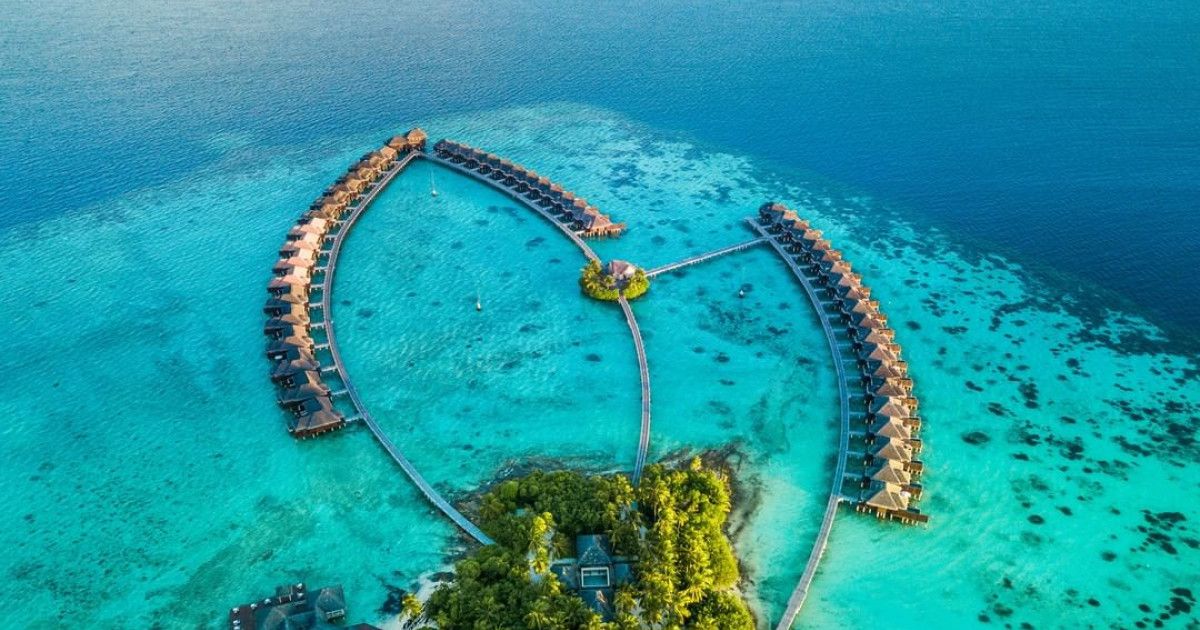
After visiting Mauroof Jameel’s exhibition, I learned that seaplanes transformed Maldivian resort architecture, turning rooms, roofs, jetties and islands into aerial icons of luxury tourism and carefully designed memory itself.
Free tourism insights
Get Free Tourism Insights
Receive selected MTO insights, tourism data alerts, and new resource updates by email.
Get Free Tourism InsightsIn the past two weeks, the most important tourism event in the Maldives is not a new resort opening, a market announcement, or a policy speech. It was an exhibition: Maldivian Resort Architecture: Identity, Memory and Legacy by Mohamed Mauroof Jameel at the National Art Gallery.
I visited the exhibition expecting drawings, models, old photographs, and fragments of memory. I found all of that. But I also found something larger: a quiet explanation of how a nation learned to turn coral islands into one of the most recognisable tourism landscapes on Earth.
There is enough material in the exhibition to write a book. Here, I want to follow only one thread: how seaplane operations reshaped Maldivian resort architecture.
At first, this may sound like a transport story. It is not. In the Maldives, transport is geography made operational. A country stretched across atolls cannot build tourism only with rooms and restaurants. It must also solve distance. And once distance is solved in a particular way, architecture begins to obey that solution.
From Horizontal To The Ariel View
Before seaplanes became common, the resort was mainly experienced at sea level. Guests arrived by boat, stepped onto a jetty, walked through sand paths, and slowly entered the island. The first gaze was horizontal: the lagoon from the veranda, the reef from the beach, the horizon from the room.
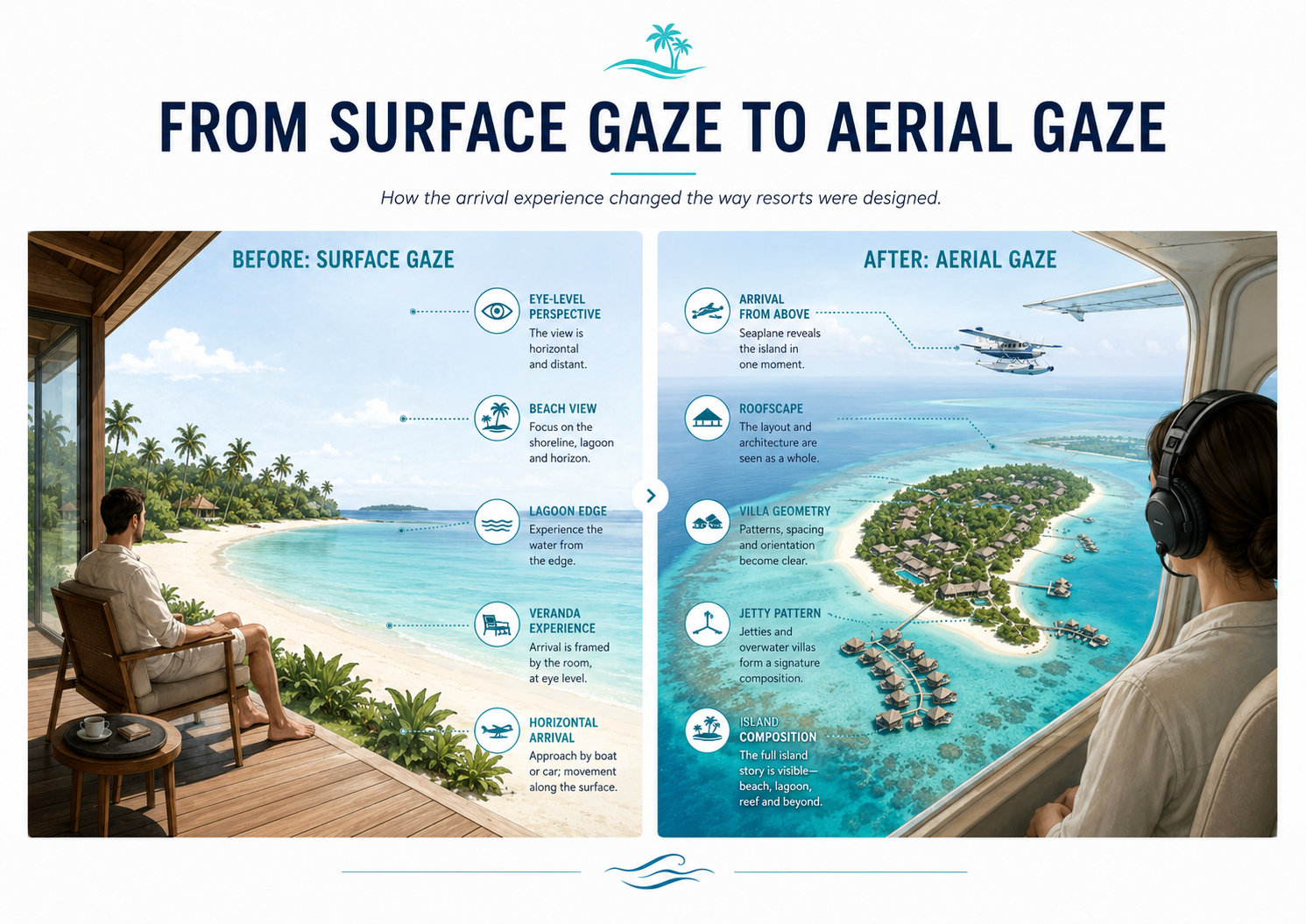
The early resort was therefore designed for the eye of a person standing on sand.
Its buildings were modest. Its logic was practical. Beachfront bungalows, timber jetties, shaded paths, thatched roofs, open-air bathrooms, dive schools, kitchens, staff quarters and service areas were arranged around the everyday mechanics of island life. The room was a viewing instrument: it framed the lagoon.
Then came the seaplane.The exhibition identifies 1993 as an important turning point. That year is not just a date in aviation history. It marks the beginning of a new architectural lens. The resort was no longer only approached from the sea. It was revealed from the sky.
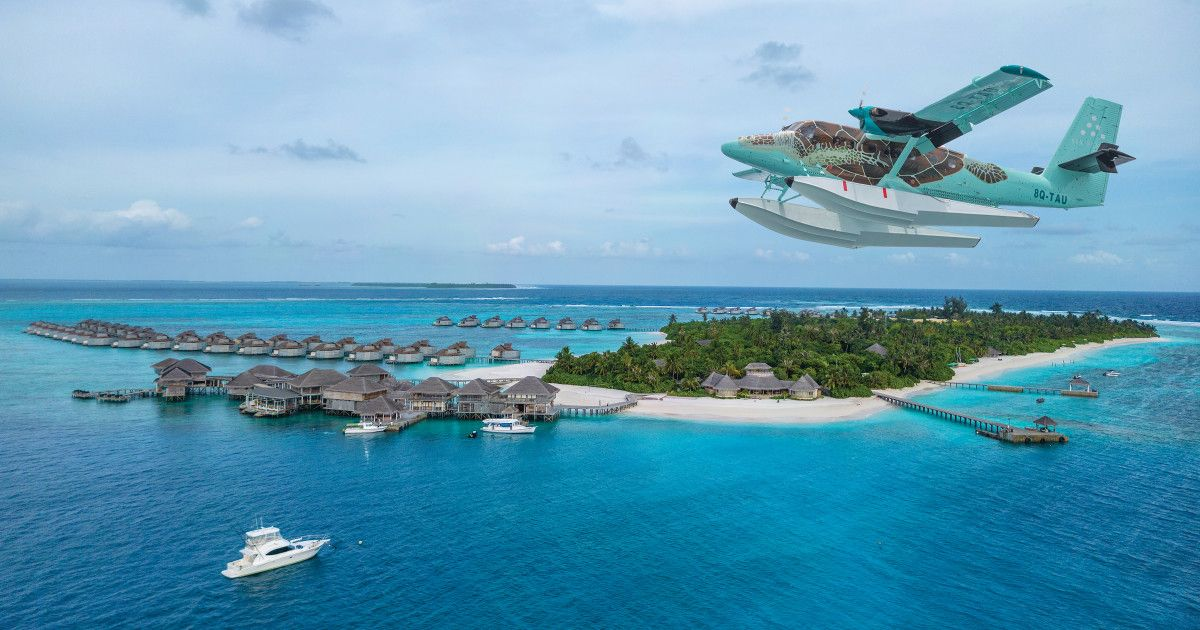
A seaplane does something almost astronomical to a resort island. It removes the horizon. It lifts the guest above the surface of the Earth and turns the island into a complete object. From the aircraft window, the guest sees the reef ring, the lagoon gradient, the white beach, the green vegetation, the jetties, the water-villa arms, the arrival platform, the roofscape, and the hidden service zones.
What was once discovered slowly becomes visible in a single glance.
This changed the first impression of the Maldivian resort. The holiday no longer began at the jetty. It began in the air.
That matters because many tourists choose the seaplane despite its cost. They are not simply buying transport. They are buying time, certainty, spectacle, and emotional confirmation. A journey that may take 20 to 60 minutes by seaplane becomes part of the holiday itself. For remote resorts, the alternative may involve a domestic flight, waiting time, baggage transfer, and then a speedboat. The seaplane compresses these stages into one dramatic sequence: airport, terminal, aircraft, lagoon, island.
It is expensive, yes. But for a guest who has crossed continents to reach the Maldives, the seaplane is often the first proof that the destination is real. From above, the Maldives looks impossible: a scattering of blue cells, reef membranes, islands like green nuclei, and villas extending across water like deliberate strokes of ink.
The transport mode became a visual product.
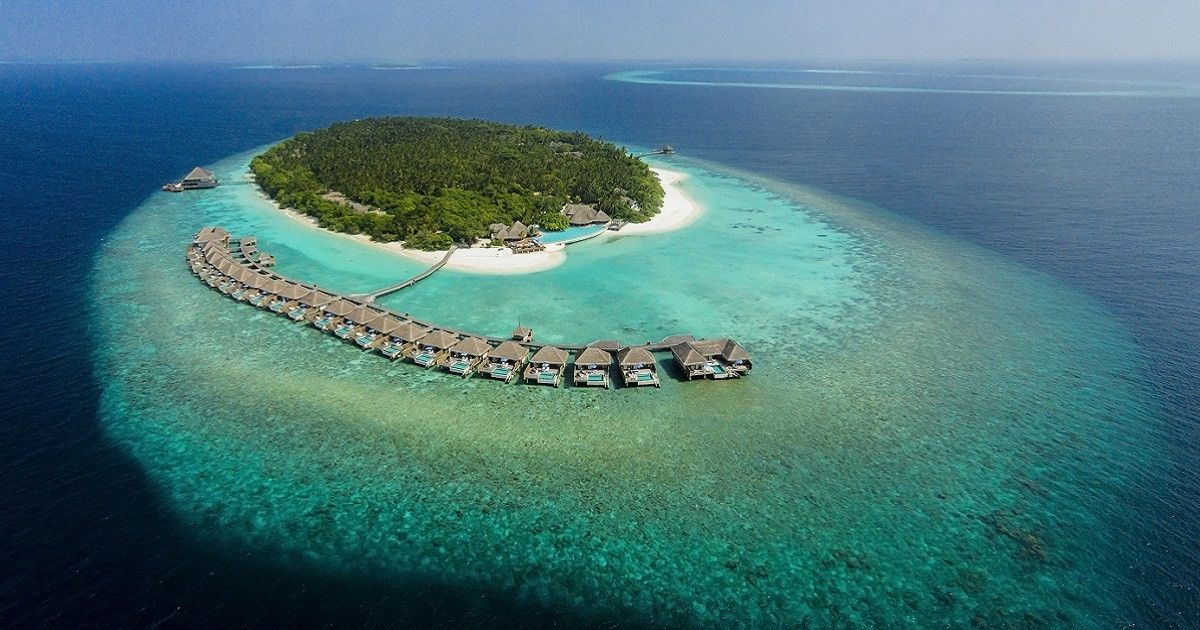
source: visit Maldives
Today, this is not a marginal system. Trans Maldivian Airways has become the world’s largest seaplane operator, with 66 DHC-6 Twin Otter aircraft, service to more than 80 resorts across 16 atolls, and more than 400 daily flights. It carries more than a million passengers a year. Alongside this, the Maldives has built a wider domestic aviation network: 20 listed land aerodromes, domestic carriers serving atoll airports, and a transfer system in which tourists move by speedboat, domestic aircraft, and seaplane depending on resort location and price point.
Hidden Infrastructure
Seaplane did more than connect islands. It changed how islands were designed.
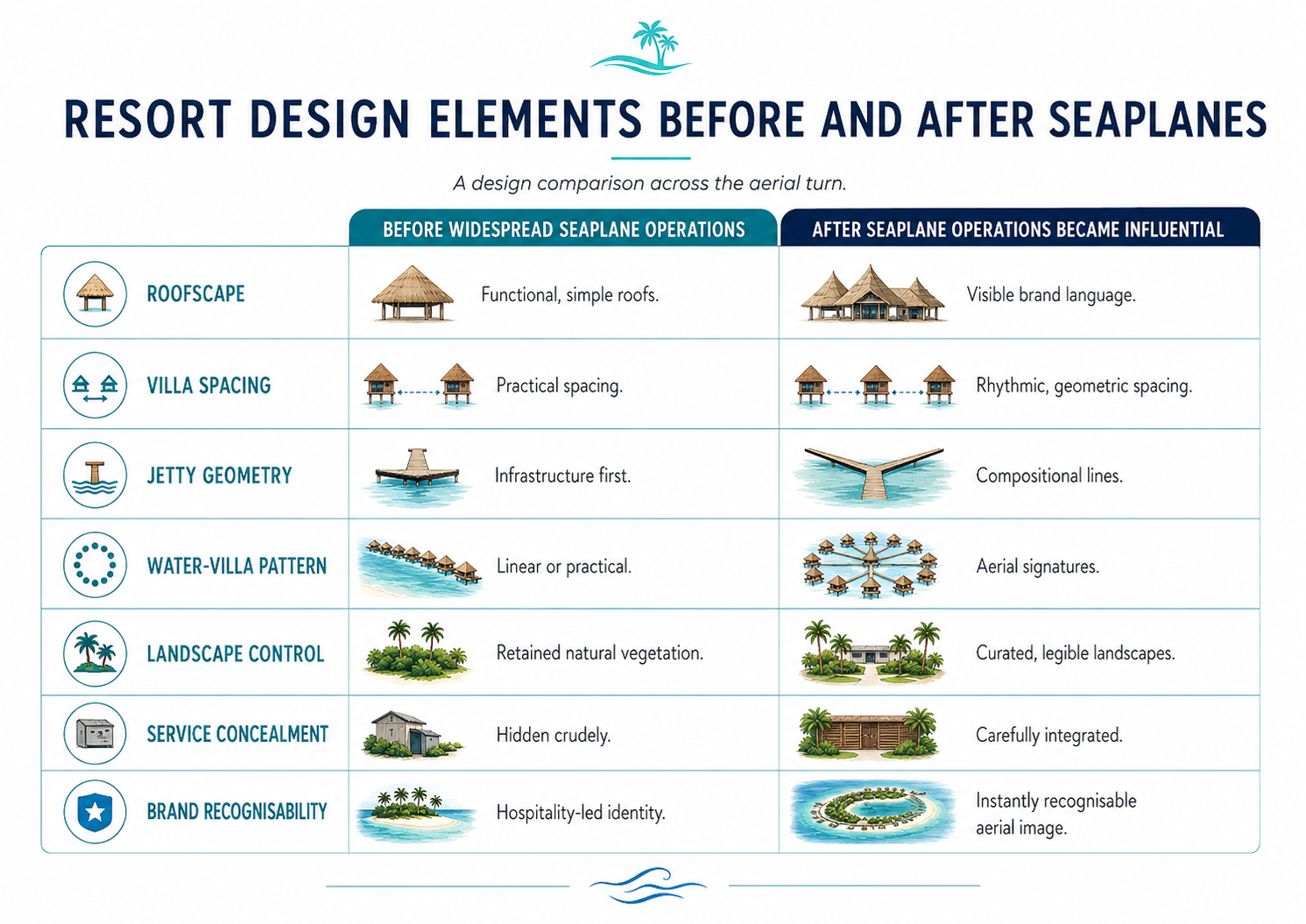
As Mauroof explians, once the resort was seen from above, the island became a composition. Villa spacing mattered. Roof colour mattered. Jetty geometry mattered. The curve of a water-villa arm mattered. Service clutter became harder to hide. A badly placed back-of-house area could disturb the entire aerial image. A well-placed jetty could become the island’s signature.
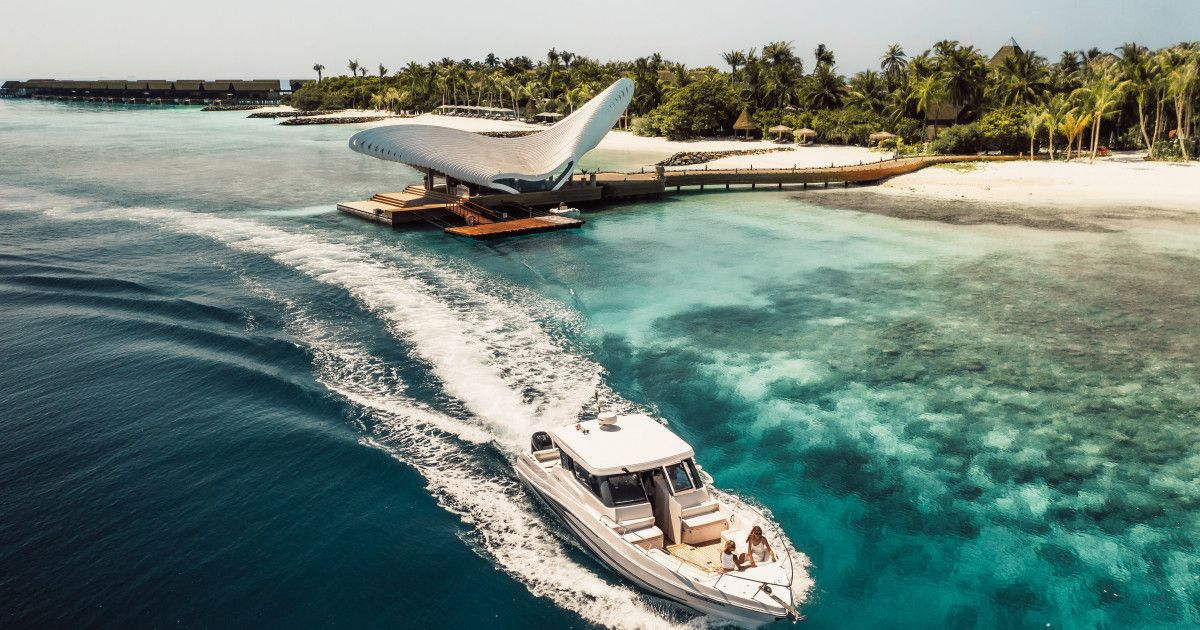
source: Visit Maldives
The resort had to perform at multiple scales: the intimacy of the room, the privacy of the villa, the rhythm of the cluster, the beauty of the island, and the memorability of the aerial view.
Most of the resort images on the Visit Maldives website show aerial views. This is why roofs became important. At ground level, a roof is shelter. From a seaplane, it is one of the most visible architectural surfaces of the resort. Thatch, timber, metal, solar panels, pitch, curve, repetition and colour all become part of the resort’s identity. A roof is no longer merely climatic. It is visual grammar.
Mauroof’s exhibition shows that Water villas underwent a similar transformation. At first, the water villa was an experiential invention: a room over the lagoon, close to the reef, private, romantic, almost improbable. But from the air, water villas became something else. They became drawing. A line of villas is a line across the lagoon. A crescent of villas is a symbol. A branching jetty is a signature. The villa became both a private retreat and a pixel in the resort’s aerial image.
The hotel room, therefore, changed its meaning. It remained a place from which the guest looked out. But it also became something looked at. Its roof, deck, pool, steps, jetty connection and spacing all contributed to the island’s total image.
This is the great paradox of Maldivian luxury: the room sells privacy, while the resort sells visibility.
The seaplane also introduced a new privacy problem. A villa may be screened from neighbours and beach paths, but not from aircraft. Private pools, open decks, outdoor showers and courtyards can be exposed from above. Designers therefore had to think vertically: roof overhangs, pergolas, angled decks, vegetation buffers and courtyard walls became part of privacy architecture.
source: Visit Maldives
Even the familiar circular movement of a seaplane near a resort deserves attention. Guests often experience it as a final cinematic round, a slow unveiling of the island before landing. Operationally, it is better understood as part of the choreography of safe water flying: the aircraft must position itself for wind, water conditions, traffic, floating platforms and the landing approach. But whatever the technical reason in a given case, the visual effect is powerful. The island presents itself like a planet turning beneath a spacecraft.
That moment matters.
A guest may photograph the resort before entering the room. The aerial image becomes the first memory, and perhaps the most durable one. Long after the holiday, the guest may forget the exact menu, the pillow type, even the transfer time. But the island from above remains: a green form in a blue universe.
This helped create the modern brand identity of Maldivian luxury. The Maldives is now marketed not only through beaches, service and villas, but through the aerial abstraction of islandness itself. Turquoise rings. White edges. Dark reefs. Water villas like geometry. An entire tourism economy compressed into a single image.
Yet this beauty carries danger.
Aerial Beauty and Responsibility
The aerial gaze can encourage better planning. It can make resorts cleaner, more ordered and more professionally designed. It can encourage service areas to be concealed, landscapes to be maintained, beaches to be cleaned, and arrival experiences to be carefully staged.
But it can also encourage ecological theatre. If the perfect image becomes the goal, then beaches may be reshaped, lagoons altered, mature trees transplanted, seagrass removed, and reef edges treated as scenery rather than living systems.
This is where Mauroof’s exhibition becomes more than nostalgia. It asks us to remember that resort architecture is not decoration. It is evidence. It shows how the Maldives moved from improvised beachfront shelter to a highly choreographed luxury system. It shows how transport, capital, design, environment and guest expectation reshaped each other over time.
For industry experts, the lesson is strategic. Architecture is part of value creation. For entrepreneurs, the lesson is practical. A tourism product is not just a room; it is a sequence of impressions. For policymakers, the lesson is urgent. If the Maldives does not document its architectural memory, it may lose the evidence of how its most important industry learned to become itself.
I left the exhibition convinced that the Maldives Tourism Observatory should not collect only arrivals, beds, prices and occupancy rates. It should also collect forms, drawings, photographs, layouts, design decisions, transfer systems and memories. Because tourism history is not only found in data tables.
Sometimes it is found in a roof.
Sometimes it is found in the curve of a jetty.
Sometimes it is found in the way a seaplane turns, and for a few seconds, reveals an island as if it were a small blue-and-green world suspended in space.