Seeing the Invisible: How Infrared Physics Helps Us Read the Night
17 Apr 2026, 09:39 · by hunaruhub · 2 min read · Science · EN
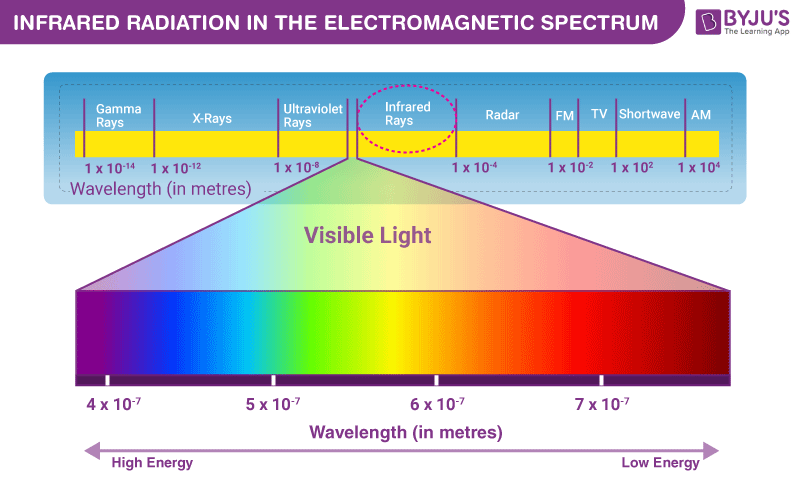
Physics becomes much more interesting when it explains something real that is happening now. Today’s topic is a perfect example. NASA has just highlighted how the VIIRS instruments on several satellites are tracking changes in night-time lighting across the world, from shifts in energy use to disruptions caused by crises. These instruments do not rely only on visible light. They also detect infrared radiation, which means they can reveal patterns our eyes alone cannot see.
NASA’s latest night-light story explains that VIIRS sensors are currently operating on Suomi NPP, NOAA-20 and NOAA-21. The article states that these instruments detect light from the visible region through to thermal infrared wavelengths, and that their day-night band is especially sensitive in low-light conditions. In other words, a satellite can “see” much more than a human observer standing on the ground.
This is why physics matters. Visible light helps us detect what is illuminated. Infrared helps detect heat-related radiation and differences in thermal behaviour. When scientists combine the two, they get a richer picture of what is happening on Earth at night. That is physics turning invisible information into useful evidence.
1) What is the electromagnetic spectrum?
The electromagnetic spectrum is the full range of electromagnetic waves arranged by wavelength or frequency. The main regions are radio waves, microwaves, infrared, visible light, ultraviolet, X-rays and gamma rays. Visible light is only a small part of the whole spectrum. Infrared lies just beyond red light, while ultraviolet lies just beyond violet light.
A key exam idea is this: all electromagnetic waves are the same type of wave. They differ in wavelength and frequency, but they all travel at the same speed in a vacuum.
2) Why infrared matters
Infrared is often linked with heat. That does not mean infrared is “hot air”; it means many warm objects emit strongly in the infrared part of the spectrum. So, if a detector is sensitive to infrared, it can provide information that ordinary vision cannot. This is why infrared is useful in satellites, remote sensing, night observations and thermal imaging.
An easy analogy is this: visible light is like reading a page under a lamp, while infrared is like noticing where the page is warm even when the room is dim. One tells you what is lit; the other can tell you something about energy and temperature.
3) What students must remember for the exam
Students often memorise the order of the spectrum but forget the meaning behind it. As wavelength decreases, frequency increases. Higher-frequency regions are generally more energetic. Visible light sits between infrared and ultraviolet. Those three positions are often tested directly in multiple-choice and structured questions.