Tourism Industry Insight: How Storage Can Buy Resorts Time When Production Falters
28 Sep 2026, 23:57 · by IzuCT · 4 min read · Tourism · EN
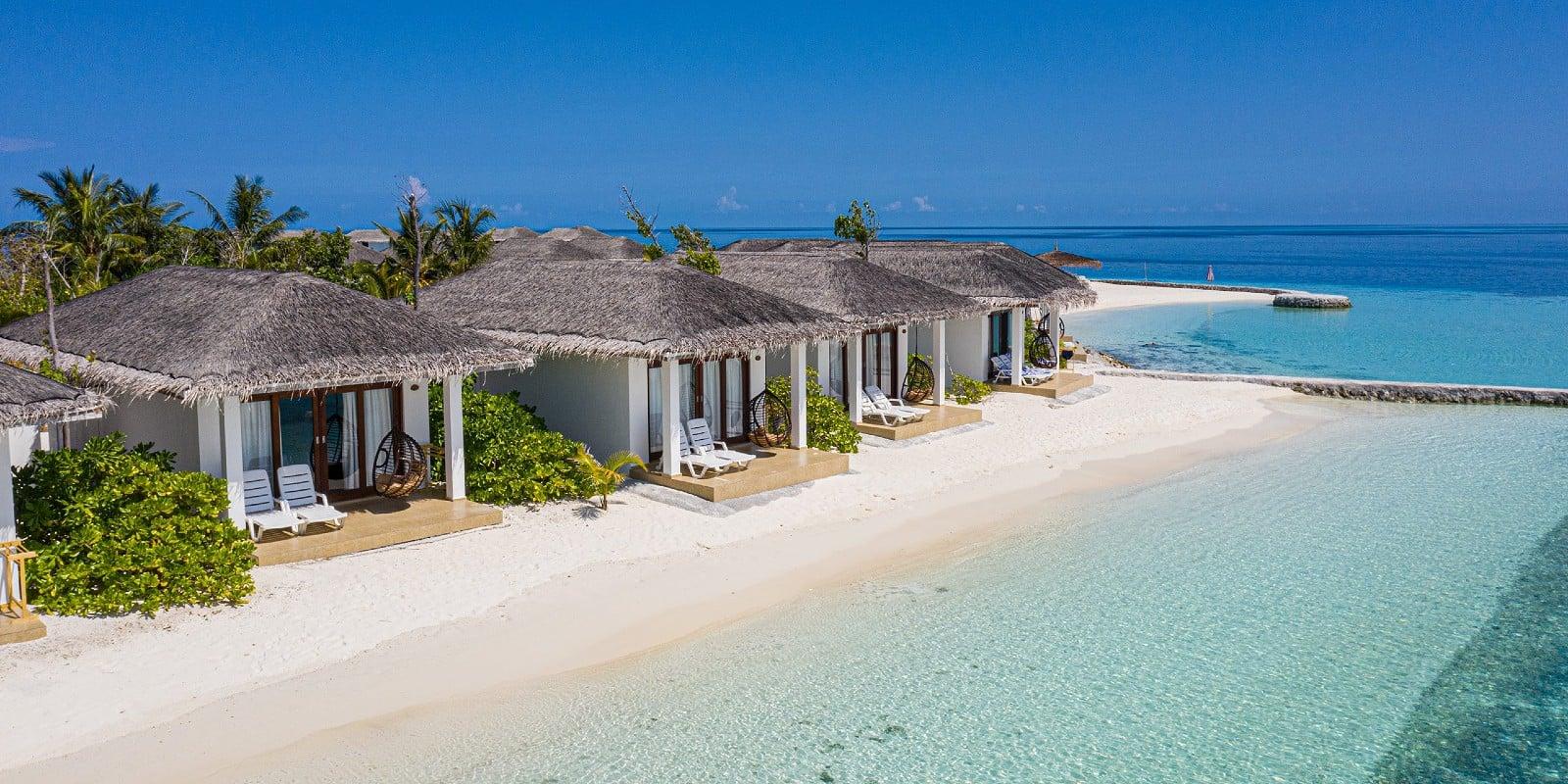
A resort does not need infinite water-production capacity. It needs enough production, storage and discipline to survive the hours when supply and demand stop matching.
Free tourism insights
Get Free Tourism Insights
Receive selected MTO insights, tourism data alerts, and new resource updates by email.
Get Free Tourism InsightsAt 9:10 a.m., a desalination plant trips offline on a busy island resort. Housekeeping is turning rooms, kitchens are preparing lunch and guests are showering after morning swims. Yet nothing visible happens. Water continues to flow because the resort has something more valuable than spare production at that moment: time. Stored water separates the instant of production failure from the instant of guest disruption. The question is not simply how much water the plant can make, but how long the island can operate safely when it cannot.
Storage solves a different problem from capacity
Production capacity answers a long-run question: can the system make enough water over a normal day? Storage answers a short-run one: can the system bridge temporary mismatches between production and consumption?
Inventory theory makes the distinction clear. A warehouse carries stock because supply and demand do not arrive at perfectly synchronised moments. Freshwater storage performs the same function. It absorbs peaks, maintenance stoppages and short equipment failures, giving production time to recover before the guest experience is affected.
A useful measure is:
Hours of cover = usable stored water ÷ critical hourly demand.
The denominator matters. During an interruption, irrigation, some laundry and selected back-of-house tasks may be delayed while drinking, kitchens, sanitation and essential guest use remain protected.
This complements Resorts Can Create More Value by Moving Energy Demand to Daylight. That article examined when water can be produced more intelligently. The buffer question is what happens when production temporarily cannot occur.
The Maldives makes the trade-off unusually visible
The One-Island-One-Resort Model as the Centre of Gravity of Maldives Tourism makes many resorts responsible for utilities that city hotels normally obtain from networks. Water security is also a live national issue: in April 2026, the Maldives convened an atoll-nations forum specifically on climate-induced water security. Environmental Protection Agency
Recent operating disclosures show the scale involved. In March 2026, Centara reported that two Maldives resorts operated three desalination plants with combined capacity of 900 cubic metres per day, supported by hourly metering and sensor-based monitoring. It reported total island consumption of 324 and 359 litres per head at the two properties. These are company figures, not industry averages, but they show why water deserves the same management attention as rooms or energy. Maldives Tourism Press
The decision resembles the capacity problem discussed in Tourism Industry Insight: Should Hotel Run Every Service at 100%?. Systems operating near their limit can struggle to absorb even small disruptions. With water, part of the headroom can sit in tanks rather than idle production machinery.
The investment choice is therefore not automatically “build a bigger plant.” If normal daily demand already fits comfortably within production, storage, redundancy, leak detection or the ability to defer non-essential loads may create more resilience. If tanks repeatedly approach minimum levels even on normal days, however, the problem may be structural under-capacity.
Measure the risk in hours, not only litres
Managers can begin with five numbers: usable tank volume, hourly demand, minimum reserve, plant availability and hours of critical-demand cover under one-plant failure.
Then test realistic scenarios. What happens at 90% occupancy if one desalination unit is unavailable for six hours? What if the outage coincides with the morning housekeeping and laundry peak? At what tank level should discretionary water use be reduced automatically?
This connects with Maldives Resort Series: The Density Frontier. Adding villas increases not only room inventory but also desalination, wastewater and staff demand. Storage can delay a capacity step, but it cannot erase one.
It also belongs inside the broader logic of island tourism infrastructure: a resort island is not merely a hotel. It is a small integrated utility system whose resilience forms part of the tourism product.
Return to 9:10 a.m. The desalination alarm sounds, technicians respond, and the guest notices nothing. That silence is not evidence that nothing happened. It is evidence that the system had time.
The deeper lesson is that resilience often comes from separating the moment a problem begins from the moment it becomes a service failure. Storage creates that separation. The strongest resort may therefore not be the one with the largest desalination plant, but the one that knows exactly how long its buffer will last—and what to protect before the clock runs out.