Tourism Industry Insight: The Shared-Island Dividend
01 Oct 2026, 00:38 · by IzuCT · 4 min read · Updates · EN
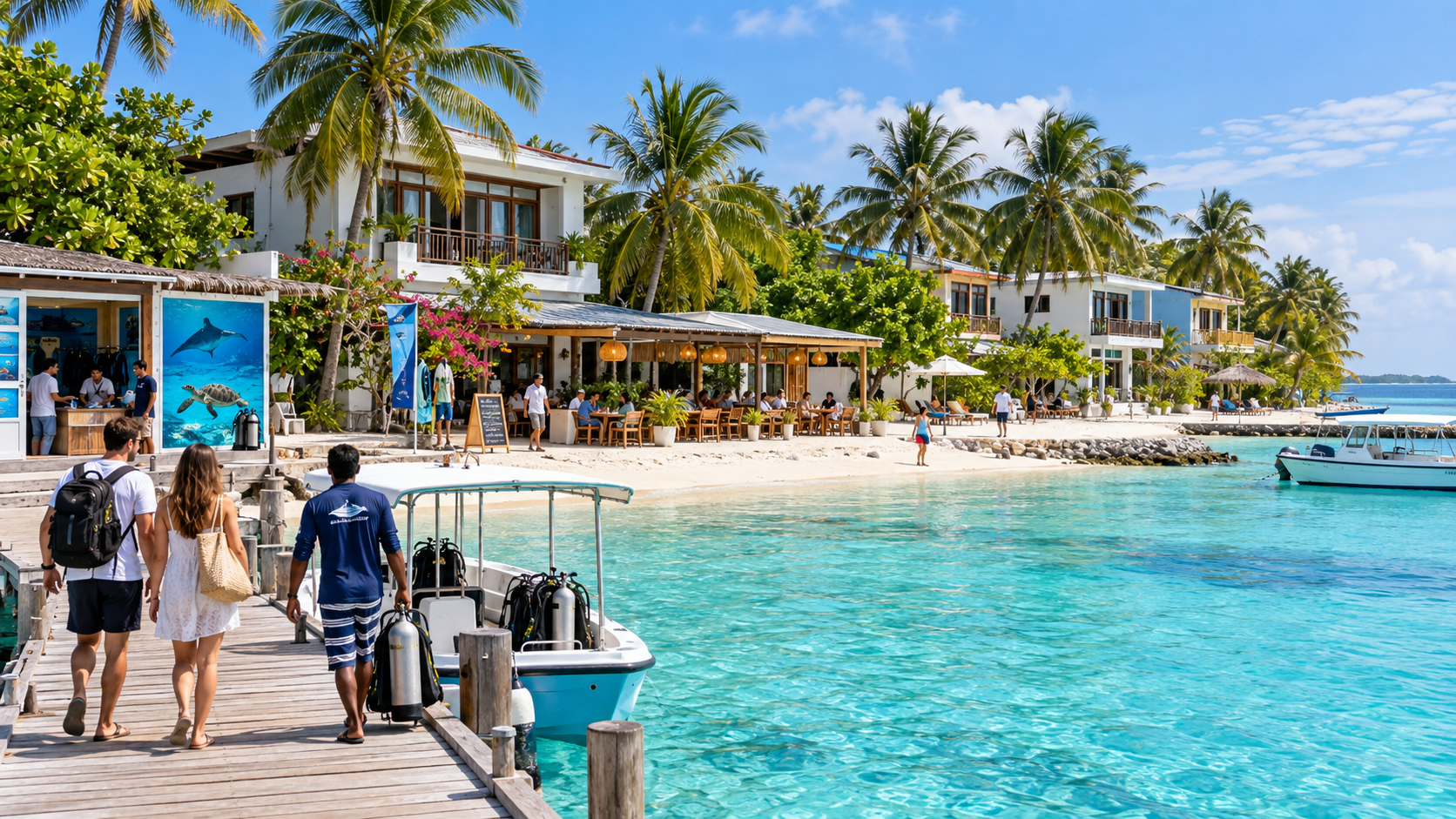
Local tourism businesses compete for bookings, but they also sell one shared destination. Improving a neighbour can sometimes increase the value of your own room.
A new café opens beside a guesthouse on a Maldivian local island. The owner could see another business competing for the visitor’s wallet. Yet the café gives future guests somewhere attractive to spend an evening, makes half-board less necessary and adds another reason to recommend the island. A dive centre improves its equipment; another guesthouse upgrades; the council cleans a public beach. None of these investments belongs to the first property. Still, each can make its room easier to sell. Tourism contains a useful paradox: competitors can also be productive complements.
The guest buys an island before buying its pieces
Economics normally imagines competing firms fighting over a fixed pool of demand. Tourism is more complicated because the product is assembled across businesses.
A guesthouse provides the bed, but the holiday may also require a beach, restaurants, transfers, excursions, shops, public spaces and reliable waste management. This is why Stop Copying Competitor Prices and Build a Rate That Fits Your Island argues that shared island characteristics belong inside accommodation value.
The relationship is therefore partly complementary. If one component improves, willingness to buy another can rise.
Economists sometimes describe this as joint demand. Coffee and breakfast, flights and hotels, diving and accommodation become more valuable when the complementary product works well. On an island, the network is wider.
Recent research calls the strategic version coopetition: firms continue competing for individual customers while cooperating where collective value can be enlarged. A 2025 study of tourism stakeholders in Portugal’s Douro low-density region found coopetition played an important role in translating regional tourism development into social value. That is one regional study, not evidence that every partnership works, but it supports the underlying logic of interdependence.
Cooperation can enlarge the pie before firms divide it
Consider an illustrative island with ten guesthouses. A coordinated evening food market, better jetty information and common beach-cleaning programme cost each property USD 1,000 annually.
If those improvements merely move guests between the same ten properties, cooperation has created little additional demand. But suppose they improve reviews of the island, encourage longer stays or increase conversion among travellers choosing between destinations. The relevant return is no longer the revenue captured by the shared project itself.
It is the additional room and visitor value created around it.
That complements Nearby Experiences Win More of the Guest’s Holiday. Easier access to restaurants, activities and experiences can increase participation because travellers face less time and coordination friction. It also reinforces the case in The Maldives’ Seven-Night Tourism Reset for giving visitors enough reasons to remain another night.
UN Tourism highlighted the same destination-level principle in September 2026 when discussing collaborative rural tourism: partnerships among businesses, communities and public institutions can strengthen local value chains and market access.
Measure what the island creates together
The danger, of course, is the free-rider problem. Everyone benefits from a cleaner beach; each individual business may prefer someone else to pay for it.
This is one reason the one-island-one-resort model internalises many tourism externalities so effectively: the operator controlling the island captures more of the return from maintaining it. Local-island tourism deliberately has many independent actors, making coordination more important.
Practitioners therefore need evidence of shared value. Track island-level review themes, average stay, guest spending outside the property, cross-referrals among businesses, excursion participation and enquiries that mention the destination rather than the individual hotel. Compare these before and after collective improvements.
A useful mental equation is simple:
shareddemand gain + shared cost saving = business diverted to partners.
This does not mean cooperating on everything. Room quality, service, brand and pricing remain legitimate areas of competition. Guesthouse Reality Check rightly emphasises that each enterprise must still survive its own occupancy, costs and debt.
Return to the new café beside the guesthouse. It may capture money the hotel restaurant could have earned. But it may also make the entire island more appealing, extend evenings, improve recommendations and persuade another traveller to choose the destination.
That is the shared-island dividend.
Local tourism becomes stronger when businesses distinguish between the value they must compete to capture and the value they can only create together. The most successful neighbour is not always a threat. Sometimes it is another reason the guest decides to come—and another reason to stay.