Tourism Industry Insight: Cooler Walkways Can Make More of an Island Usable
14 Oct 2026, 16:54 · by IzuCT · 4 min read · Tourism · EN
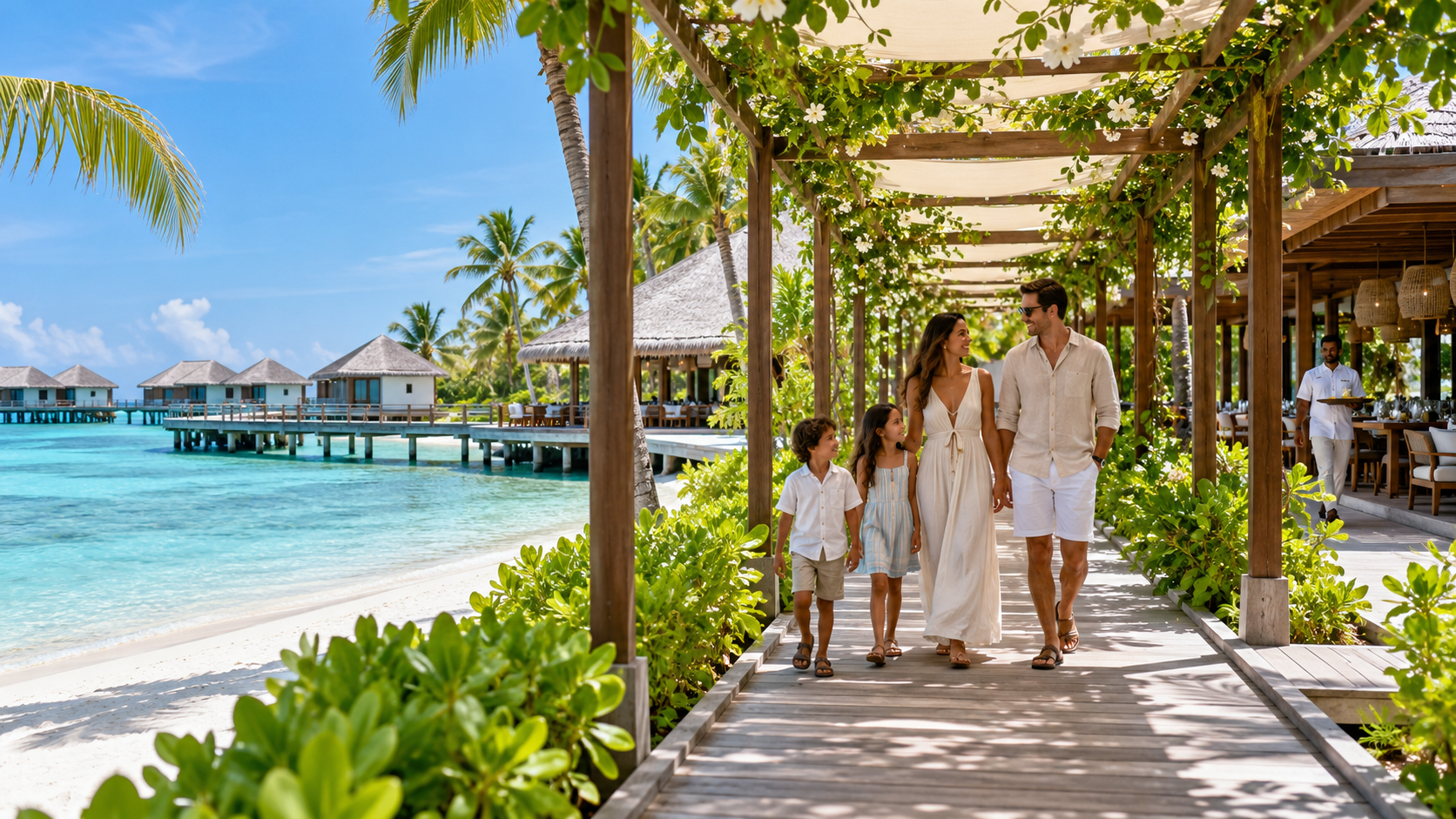
Thoughtfully designed shade can improve outdoor comfort, make resort facilities more accessible and reduce unnecessary transport movements while supporting safer working conditions.
Free tourism insights
Get Free Tourism Insights
Receive selected MTO insights, tourism data alerts, and new resource updates by email.
Get Free Tourism InsightsAt 1:30 p.m., a family leaves a Maldivian beach villa for lunch. The restaurant is only six minutes away, but half the pathway crosses an exposed stretch of sand and paving. They request a buggy instead. Nearby, a housekeeping attendant makes the same journey repeatedly, carrying supplies beneath the afternoon sun. The island is compact, its pathways immaculate, and the air temperature is nearly identical to that beneath the trees. Yet the two environments feel remarkably different. The design question is not simply how far people must travel. It is how much heat they encounter along the way.
The thermometer misses part of the experience
Air temperature tells only part of the outdoor comfort story. People also absorb heat from sunlight and surrounding surfaces. Wind helps remove heat, while humidity limits the body's ability to cool through perspiration. Shade reduces direct solar radiation even when the surrounding air temperature changes very little.
Research supports this distinction. A peer-reviewed study of street trees found relatively modest reductions in air temperature but meaningful improvements in thermal comfort through reduced radiant exposure. The US Environmental Protection Agency also documents how vegetation cools surfaces through shading and evaporation. These findings establish the physical mechanism, although their precise effects on Maldivian islands require local measurement.
The geometry matters. A decorative palm may frame a beautiful photograph without protecting the pathway beneath it. A broader canopy, carefully positioned pergola or building overhang may provide better coverage. Shade also moves throughout the day. A comfortable morning route can become exposed by lunchtime.
One uncomfortable stretch can change the whole journey
This creates an interesting network problem. A guest decides whether to walk based on the complete journey, not the average comfort of its individual sections.
A mostly shaded pathway containing one long, exposed section may still encourage guests to request transport. This extends the argument in Nearby Experiences Win More of the Guest's Holiday: accessibility depends on effort and inconvenience, not distance alone.
The issue becomes more consequential as resorts expand. The Density Frontier explains how additional villas can increase pressure on shared infrastructure. More accommodation also generates more movements between restaurants, beaches, recreational facilities and guest rooms. Improving walking conditions may therefore increase the usefulness of existing infrastructure without adding another vehicle.
Consider an illustrative resort installing continuous shade along a frequently used 180-metre pathway. If midday buggy requests subsequently decline, the property might reduce vehicle movements while giving guests greater freedom to explore independently.
That commercial benefit remains a hypothesis. Walking preferences also depend on age, mobility, weather, luggage and personal choice. The relevant question is whether improving the route changes actual behaviour enough to justify the investment.
Measure comfort where movement happens
A practical assessment begins by mapping frequently used pathways at different times of day. Managers can identify exposed sections, observe pedestrian movements and compare buggy requests during similar occupancy and weather conditions.
For outdoor employees, heat exposure deserves particular attention. Occupational safety guidance recommends wet-bulb globe temperature measurements because they incorporate humidity, radiation and air movement. A conventional thermometer cannot capture these combined conditions. Shade must complement, not replace, drinking water, rest and appropriate heat precautions.
The investment decision should consider shade coverage, installation and maintenance costs, pedestrian comfort, buggy movements and employee exposure. The most valuable intervention may be a modest structure along a heavily used service route rather than elaborate landscaping in an already comfortable garden.
This complements Cross-Trained Staff Can Create Hidden Capacity in Hotels: workforce flexibility becomes more useful when employees can move safely between responsibilities.
It also connects to The Beach Capital Test, which treats environmental quality as an economic asset. On inhabited islands, the benefits can extend beyond individual properties. As The Shared-Island Dividend suggests, improvements to shared public spaces can strengthen the wider visitor experience.
Return to the family leaving its beach villa. The restaurant has not moved, and the distance remains six minutes. But a shaded pathway could make walking a pleasant choice rather than an uncomfortable necessity.
The resort should still provide transport for guests who need or prefer it. The opportunity is to make another option genuinely attractive.
The deeper insight concerns the relationship between geography and experience. An island's physical size is fixed, but its comfortably accessible area can change. Better shade does not create additional land or shorten distances. It can make existing spaces more usable throughout the day.
Sometimes improving destination accessibility begins not with another vehicle, but with a better pathway.